
Do You Need Bed Stiffeners for Your Toyota Tacoma? Complete Bed Flex Protection Guide (2024-2025)
You just bolted a bed rack, a rooftop tent, or a slide-in topper onto your brand new 2024+ Tacoma, and a few months later you notice something that shouldn't be there — a hairline crack creeping out from a tie-down point, or a gap opening up between the bed rail and the cab that wasn't there at delivery. Nothing fell off. Nothing broke outright. But the bed is moving in ways it wasn't built to, and that's not your imagination.
The 4th-gen Tacoma's bed is molded from SMC composite — lighter and more dent-resistant than the stamped steel beds of past generations, but genuinely softer under sustained point loads. Bolt a bed rack, RTT, or loaded cargo system into it and that composite bed can flex more than most owners expect, and enough flex over enough miles turns into cracking, misaligned panels, and hardware working itself loose.
If you're running any weight-bearing accessory in your 4th-gen Tacoma's bed — or you're planning to — here's what's actually happening back there, and how to stop it before it turns into a repair bill.
Why the 2024+ Tacoma's Bed Flexes
Toyota switched the Tacoma's bed to an SMC (Sheet Molded Composite) construction starting with the 4th generation, trading steel for a lighter, corrosion- and dent-resistant material. It's a real upgrade against grocery-cart dings — but it changes how the bed behaves under load in ways a lot of new owners don't find out about until it's already happening.
- Composite flexes differently than steel. Stamped steel beds distribute stress across a continuous panel. Composite panels are more prone to localized flex at mounting points, especially where hardware is bolted directly through the bed rail.
- The factory bed rail wasn't engineered around aftermarket loads. It's rated for the OEM tie-down system and factory accessories — not the concentrated point loads of a bolted-on bed rack or rooftop tent.
- Bed racks and RTTs concentrate weight at just a few bolt points. Instead of spreading a load across the whole bed floor, a roof tent or cargo rack pushes hundreds of pounds through four or six mounting locations, and the composite around those points is what gives first.
- Off-road articulation adds dynamic stress on top of static weight. Every wheel that leaves the ground twists the frame and bed independently, which repeatedly flexes the bed rail in a way that a stationary parking-lot load never will.
Signs Your Tacoma's Bed Is Already Flexing
Bed flex doesn't always announce itself with a loud crack. Most owners catch it early by watching for:
- A visible gap opening between the bed rail and the cab that wasn't there when the truck was new
- Hairline stress marks or spider-cracking radiating out from tie-down points or bed rack mounting bolts
- A bed rack, tonneau, or RTT that no longer sits flush or square the way it did on install day
- Bolts or hardware that keep working loose no matter how many times you re-torque them
- Noticeable flex or "give" in the bed rail when you lean on it near a mounting point
Catch any of these early and a set of bed stiffeners is a cheap fix. Ignore them and you're looking at cracked composite panels, a compromised bed rack mount, and a repair that costs a lot more than prevention would have.
What Bed Stiffeners Actually Do
Bed stiffeners aren't a cosmetic add-on. They're structural steel reinforcement that bolts to the inside of the bed rail and spreads load across a much wider footprint than the factory composite alone can handle.
Instead of a bed rack or RTT concentrating hundreds of pounds through a handful of factory mounting points, a properly engineered stiffener kit ties those points into a rigid steel channel that resists outward deflection — keeping the load in the frame and hardware, not in the composite panel itself.
The Fix: RCI Offroad Bed Stiffeners for the 2024–2025 Tacoma
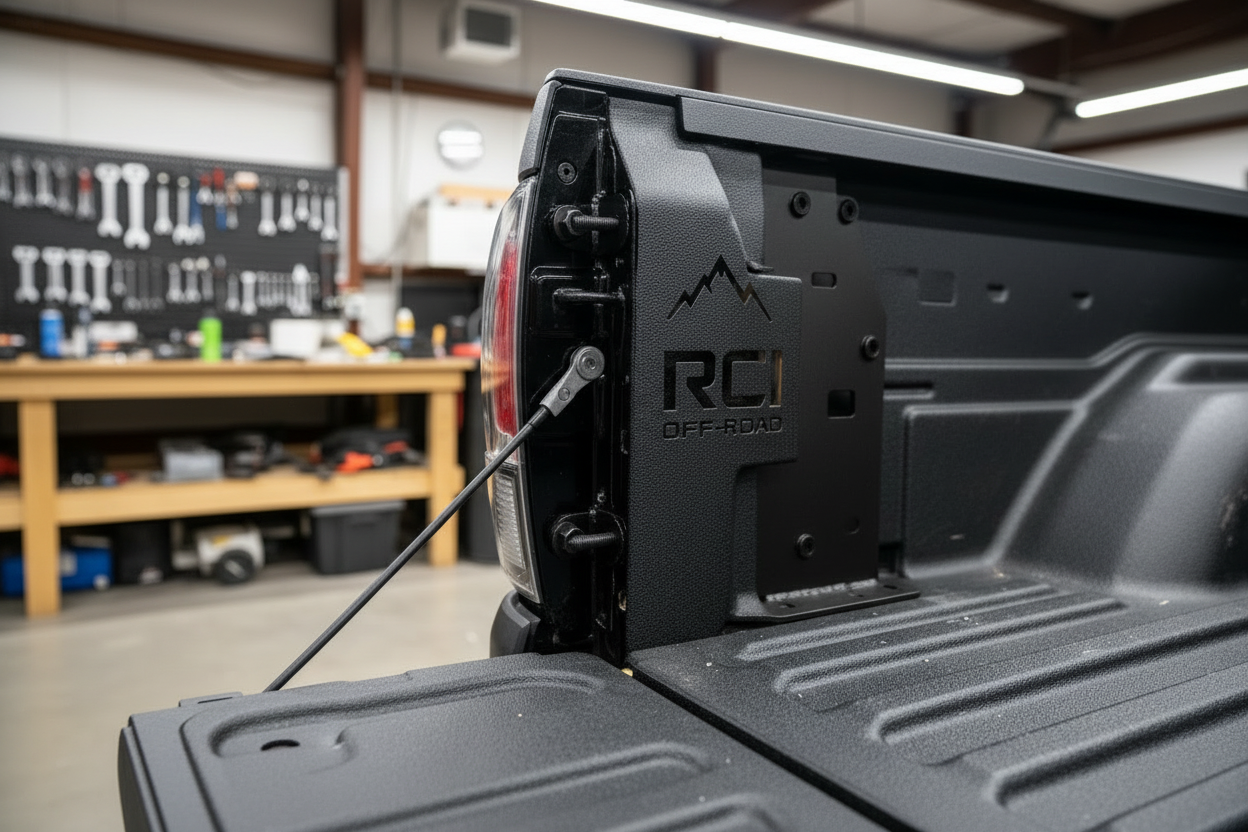
The RCI Offroad Bed Stiffeners | Toyota Tacoma (2024-2025) are purpose-built for the 4th-gen bed and address the exact failure mode described above — composite bed walls flexing outward under load from racks, toppers, roof tents, and other heavy accessories.
- Dual Stiffener Design: one driver-side and one passenger-side unit, engineered for both 5' and 6' bed lengths without modification
- OEM Bed Mat Compatible: installs underneath the factory Toyota bed mat — no trimming or bed liner removal required
- Integrated Tie-Down & Accessory Mounts: adds secondary anchor points for cargo, plus mounting provisions for antennas, whips, and safety flags
- Durable Powder Coat Finish: two-stage primer with textured black powder coat resists UV fade, road salt, and abrasion
- Tool-Free Hardware: all fasteners and instructions included — no drilling, no body panel removal, installs in minutes
At a Glance
| Spec | RCI Offroad Bed Stiffeners | Toyota Tacoma (2024-2025) |
|---|---|
| Fitment | 2024–Present Tacoma, all cab configurations |
| Bed lengths | 5' and 6', no modification required |
| Installation | Tool-free, no drilling, installs in minutes |
| Bed mat compatibility | Works under factory OEM bed mat |
| Finish | Two-stage primer, textured black powder coat |
| Price | $189.00 |
Do You Actually Need Bed Stiffeners?
Not every 4th-gen Tacoma needs them on day one. A truck running stock, hauling light cargo, or wearing a basic soft tonneau isn't under enough sustained load to worry about bed flex. Where stiffeners start to matter:
- You're running or planning to run a bed rack, hardtop, or rooftop tent bolted through the bed rail
- You regularly carry heavy cargo or gear that concentrates weight at a few points instead of spreading it flat
- You wheel off-road with weight in the bed, where articulation adds dynamic stress on top of static load
- You've already noticed any of the early warning signs above
If any of that describes your build, stiffeners are cheap insurance against a composite bed crack that costs a lot more to fix than to prevent.
Protect Your Bed Before It Cracks
Don't wait for a hairline crack at your bed rack mount to find out your Tacoma's composite bed wasn't built for the load you're putting on it. Check out the RCI Offroad Bed Stiffeners | Toyota Tacoma (2024-2025) for a tool-free fix, or browse the full Tacoma 4th Gen parts collection to see everything else built for your truck.
Frequently Asked Questions
Do I need bed stiffeners on my Tacoma?
Not always. If you're running the truck stock or with light cargo, you can skip it. But if you're running a bed rack, rooftop tent, hardtop, or heavy overlanding gear — or you regularly load the bed off-road — stiffeners are a cheap way to prevent the composite bed from flexing and cracking under that load.
What causes bed flex on the 2024+ Tacoma?
The 4th-gen Tacoma uses an SMC composite bed instead of stamped steel. It resists dents well but flexes more at concentrated mounting points, which is exactly where bed racks, RTTs, and heavy accessories put their load.
Will bed stiffeners work with my factory bed mat?
Yes — the RCI stiffeners are designed to sit under OEM Toyota bed mats without interference. No removal or trimming of the bed mat is required.
How long does installation take?
Most owners install the RCI Offroad Bed Stiffeners in well under an hour using hand tools. The kit includes all fasteners and instructions, and no drilling or body panel removal is required.
Do bed stiffeners fit both short and long beds?
Yes. The RCI Offroad kit is engineered to fit both 5' and 6' Tacoma beds across all cab configurations without modification.
Do bed stiffeners affect my tie-down points or bed liner?
No — they add secondary tie-down and accessory mounting points rather than removing any factory ones, and they install without needing to pull the bed liner.
Is bed flex something Toyota will cover under warranty?
Coverage varies by dealer and by how the bed is loaded, so it's worth checking with your dealer directly. Keeping your build within factory-rated payload and documenting how accessories are mounted is the safest way to avoid a dispute either way.