
Do You Need Rock Sliders for Your Toyota Tundra? Complete Rocker Panel & Trail Protection Guide (2007-2021)
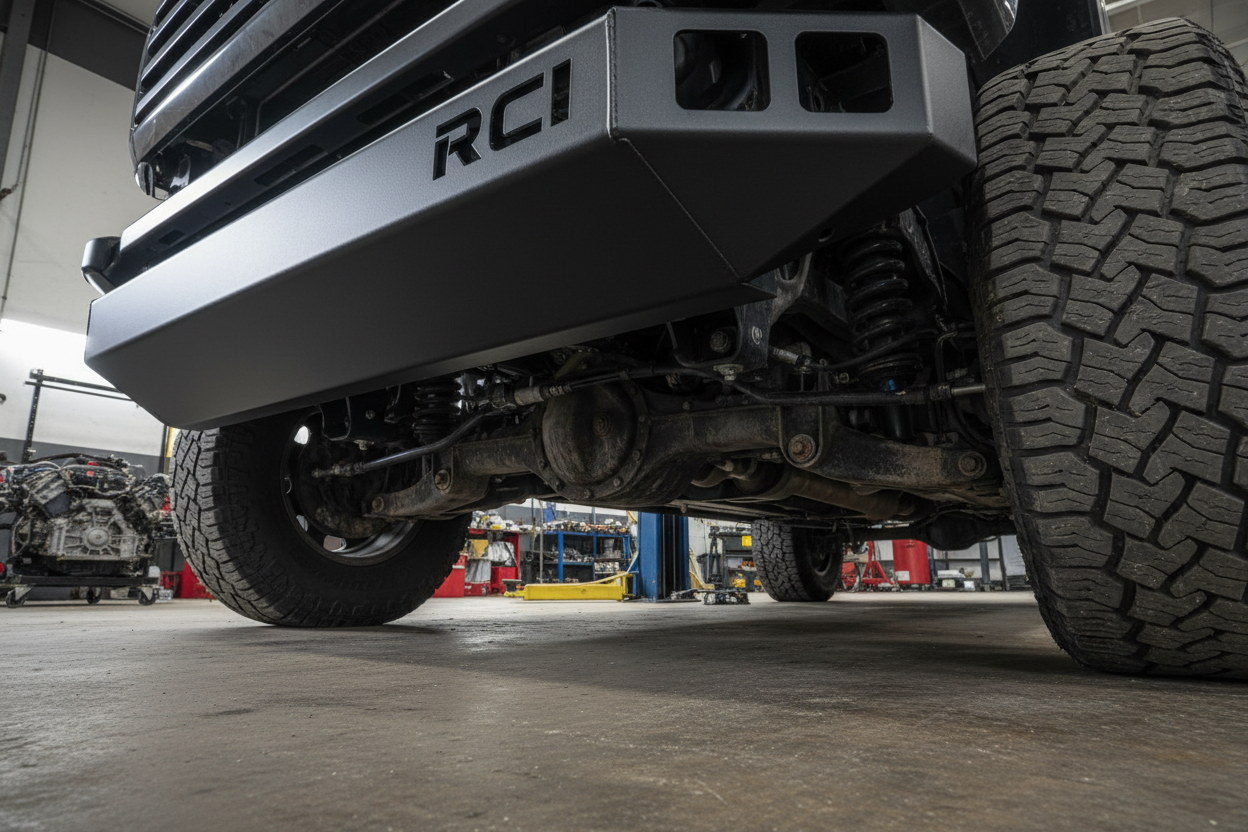
You backed carefully out of a job-site driveway, or eased over a rutted fire road, and heard that sound anyway—the dull scrape of sheet metal on rock, or the softer thud of a curb catching your rocker panel. On a stock 2007–2021 Toyota Tundra, that panel is thin, unsupported, and sits right where obstacles hit first. Once it's creased, you're looking at a body shop bill that can run into four figures—and a dent that never quite buffs out.
If you wheel your Tundra, use it for work near job sites and gates, or just want real side protection instead of the flimsy factory running boards, this is the problem rock sliders were built to solve.
Why the Rocker Panel Is Your Tundra's Weak Point
The rocker panel—the body section running under each door, between the front and rear wheels—is not structural. It's a thin, formed piece of sheet metal that was never designed to take a hit. On the Tundra specifically, that panel sits low and wide, which means it's the first thing to contact:
- Trail obstacles — rocks, ledges, and ruts on off-camber terrain
- Curbs and parking blocks — especially on job sites or tight urban parking
- Ditches and berms — when you're easing the truck through soft shoulders or gravel lots
Once a rocker panel is dented or creased, it's rarely a simple fix. Repair usually means cutting out the damaged section, welding in new metal, and repainting—work that a body shop will price by the hour, not the inch.
Rock Sliders vs. Side Steps: Not the Same Part
This is one of the most common points of confusion, and it matters before you buy. Factory or aftermarket side steps are step-assist accessories, usually thin tubing or plastic bolted to sheet metal brackets. They're built to hold your foot, not a 5,000-lb truck.
Rock sliders are a different category of part entirely. They're heavy-gauge steel tube or plate that bolts directly to the truck's frame—not the body—so an impact transfers load into the chassis instead of crumpling a door skin. Sliders that also work as a step are a bonus, not the primary job.
| Feature | Rock Sliders | Side Steps |
|---|---|---|
| Mounting point | Frame | Sheet metal / brackets |
| Material | 2″ square steel tube or plate | Thin tube, aluminum, or plastic |
| Impact rated | Yes—designed for it | No—cosmetic/step only |
| Primary purpose | Body & rocker panel protection | Step assist |
| Doubles as a step | Yes, with flat or diamond-plate tops | Yes |
Weld-On vs. Bolt-On: Which Is Actually Better?
Weld-on sliders create a permanent, single-piece connection to the frame and are common on dedicated trail rigs where every ounce of rigidity counts. But welding means a professional install, a paint job to cover the weld, and a slider you can never remove for resale or a trade-in.
Bolt-on sliders—like the RCI Offroad sliders below—use a full frame-support mounting plate with multiple grade-8 bolts spread across several frame points. Done correctly, a quality bolt-on mount is just as rigid in real-world use, installs in an afternoon with basic hand tools, and can be removed without leaving a mark if you ever sell the truck.
What Thickness and Tube Size Actually Matters
Wall thickness and tube diameter are where a lot of budget sliders cut corners. A 1.75″ round tube flexes more under side load than a 2″ square tube, which resists bending and twisting far better when a rock or curb catches it at an angle. Look for:
- 2″ square main tube (not thin round stock)
- A full frame support mounting plate, not just end-caps bolted to two points
- Powdercoat finish for corrosion resistance if the sliders will see mud, salt, or standing water
Do Rock Sliders Affect Resale Value?
Quality bolt-on sliders are viewed by most Tundra buyers as a plus, not a modification to reverse—especially if the factory rocker panels underneath are still undamaged. The bigger resale risk is the opposite scenario: selling a truck with rocker panel dents and creases from years of unprotected off-road or job-site use, which buyers and appraisers immediately price down.
The Fix: RCI Offroad Rock Sliders for 2007–2021 Toyota Tundra
The RCI Offroad Rock Sliders | Toyota Tundra (2007-2021) are built around the two things that actually matter for real protection: a 2″ square main tube and a full frame support mounting plate that bolts to multiple points on your Tundra's frame instead of relying on sheet metal brackets.
That means impacts that would otherwise crease a rocker panel or door get transferred straight into the frame, where the truck can actually absorb them—while the top surface still gives you a solid, functional step in and out of the cab.
Here's why it's the right fit for the exact problem outlined above:
- Bolt-on installation — no welding, no bodywork, done in an afternoon in your driveway
- Fits both cab configurations — available for CrewMax and Double Cab
- Finish options — Satin Black Powdercoat for a finished, corrosion-resistant look, or Bare Material if you're planning your own coating
- Optional top plates — add a flat, diamond-plate-style step surface, or skip them for a cleaner tube-only profile
- Verified fitment — specifically engineered for the 2007–2021 Tundra, not a universal fit stretched across multiple trucks
If you want to see every configuration—including finish and top plate combinations—across the full lineup of exterior armor for this generation, browse the Tundra Rock Sliders collection.
Ready to Protect Your Rocker Panels?
A creased rocker panel is a repair bill you can't undo. A set of properly mounted rock sliders is protection you'll use every single time you park close, ease over a curb, or point the truck down a trail.
Check out the RCI Offroad Rock Sliders | Toyota Tundra (2007-2021) to solve the problem before it starts, or browse the full Toyota Tundra parts collection for everything else built for your generation and configuration.
Frequently Asked Questions
Are rock sliders worth it?
For any Tundra that sees trail use, job sites, tight parking, or gravel lots, yes. The cost of a quality bolt-on set is almost always less than a single rocker panel repair, and the protection works every time you park or wheel the truck—not just in a worst-case scenario.
What is the purpose of rock sliders?
Rock sliders protect the rocker panel and lower door area from impacts by transferring the load into the truck's frame instead of the sheet metal. Many designs, including RCI's, also double as a functional step for getting in and out of a lifted truck.
Is it better to weld or bolt on rock sliders?
Welded sliders are permanent and common on dedicated trail rigs, but they require a pro install and can't be removed later. A properly engineered bolt-on system with a full frame-support mounting plate delivers comparable real-world rigidity, installs with hand tools, and can be removed cleanly if you sell the truck.
Are rock sliders the same as side steps?
No. Side steps are lightweight, cosmetic step-assist parts bolted to sheet metal brackets—they're not rated to take an impact. Rock sliders are heavy-gauge steel mounted to the frame specifically to absorb side impacts, with step function as a secondary benefit.
How are rock sliders installed?
Quality bolt-on sliders mount using a frame-support plate and multiple bolted attachment points along the frame rail. Most installs take an afternoon with basic hand tools—no welding or cutting required.
What thickness or tube size should I look for in rock sliders?
Look for 2″ square main tube rather than thinner 1.75″ round tube. Square tube resists bending and twisting under side-impact loads significantly better, especially when a rock or curb catches the slider at an angle.
Do rock sliders affect resale value?
Quality bolt-on sliders are generally seen as a positive by Tundra buyers, particularly if they've kept the factory rocker panels damage-free. The bigger resale hit comes from selling a truck with dented, unprotected rocker panels from years of job-site or trail use.
What are the downsides of rock sliders?
The main trade-offs are added weight, a wider stance that can slightly reduce ground clearance at the slider edge, and upfront cost. For most owners who park tight, work near job sites, or wheel the truck, the protection outweighs these trade-offs.